
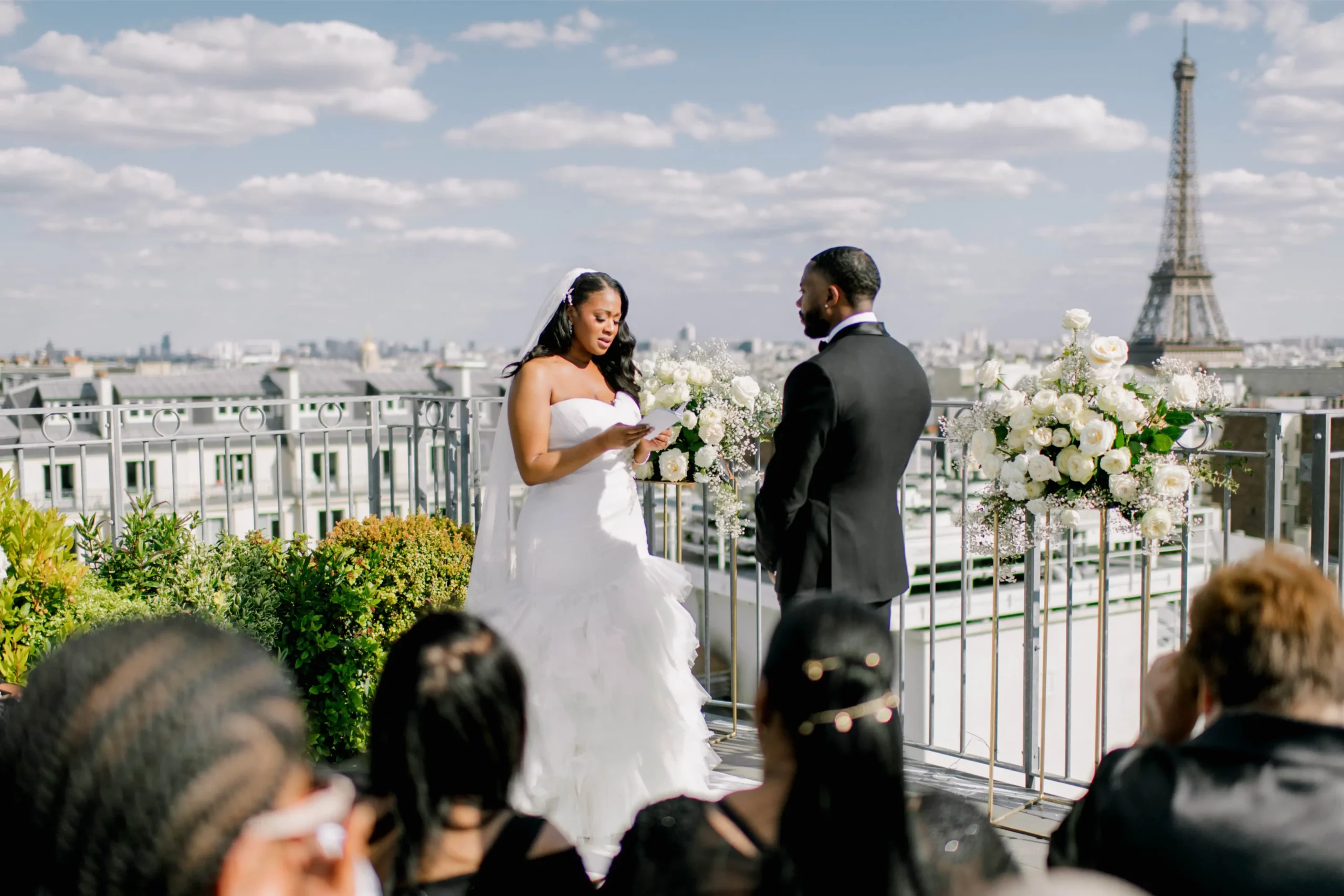
Paris doesn’t need an introduction. It’s the city that turns ordinary moments into memories – and an elopement here is exactly that: intimate, intentional, and entirely yours. No seating charts. No compromises. Just the two of you, the city of light, and a ceremony built around what actually matters to you.
Whether you’re dreaming of a sunrise ceremony by the Seine or a rooftop exchange of vows above the Haussmann rooftops, this guide covers everything – legalities, budget, seasons, vendors, and the details that make the difference between a beautiful day and an unforgettable one.
What does eloping in Paris actually mean?
“Eloping” once meant running away to get married in secret. Today, it means something far more deliberate: choosing intimacy over spectacle.
A Paris elopement is a ceremony designed for two – or for a handful of the people who matter most. No grand reception, no long guest list, no months of social negotiation. Just a meaningful ceremony in one of the world’s most romantic cities, followed by a day that belongs entirely to you.
In Paris, an elopement can take two forms: symbolic or legally binding. A symbolic ceremony has no legal standing in France – it’s a personal ritual, as intimate or as elaborate as you choose. A civil ceremony, on the other hand, is legally recognised but comes with significant paperwork requirements for non-residents. Most foreign couples opt for the symbolic route in Paris and handle the legal formalities in their home country before or after.
That distinction matters. And it shapes everything from your planning timeline to your document checklist. So let’s look at it properly.
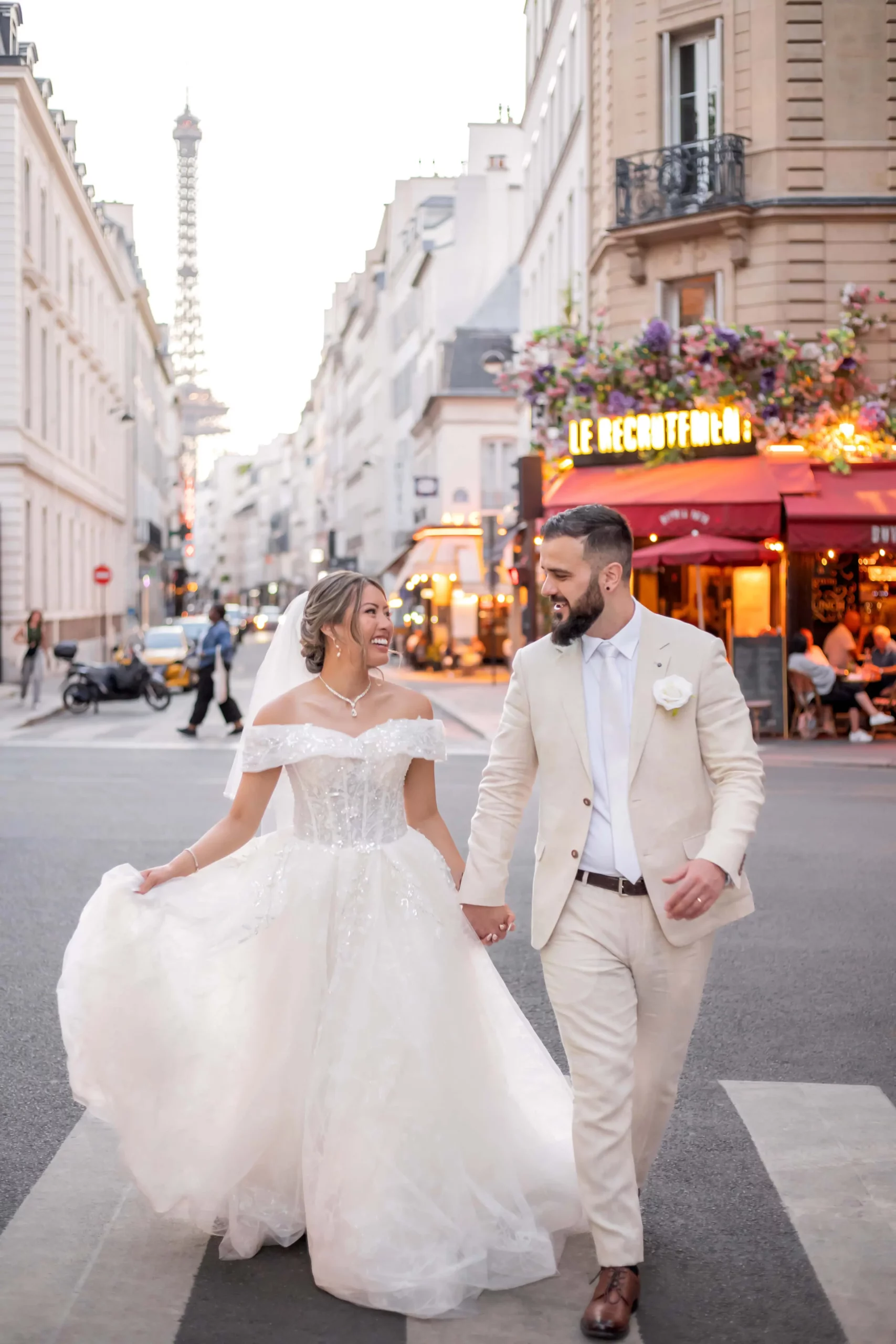
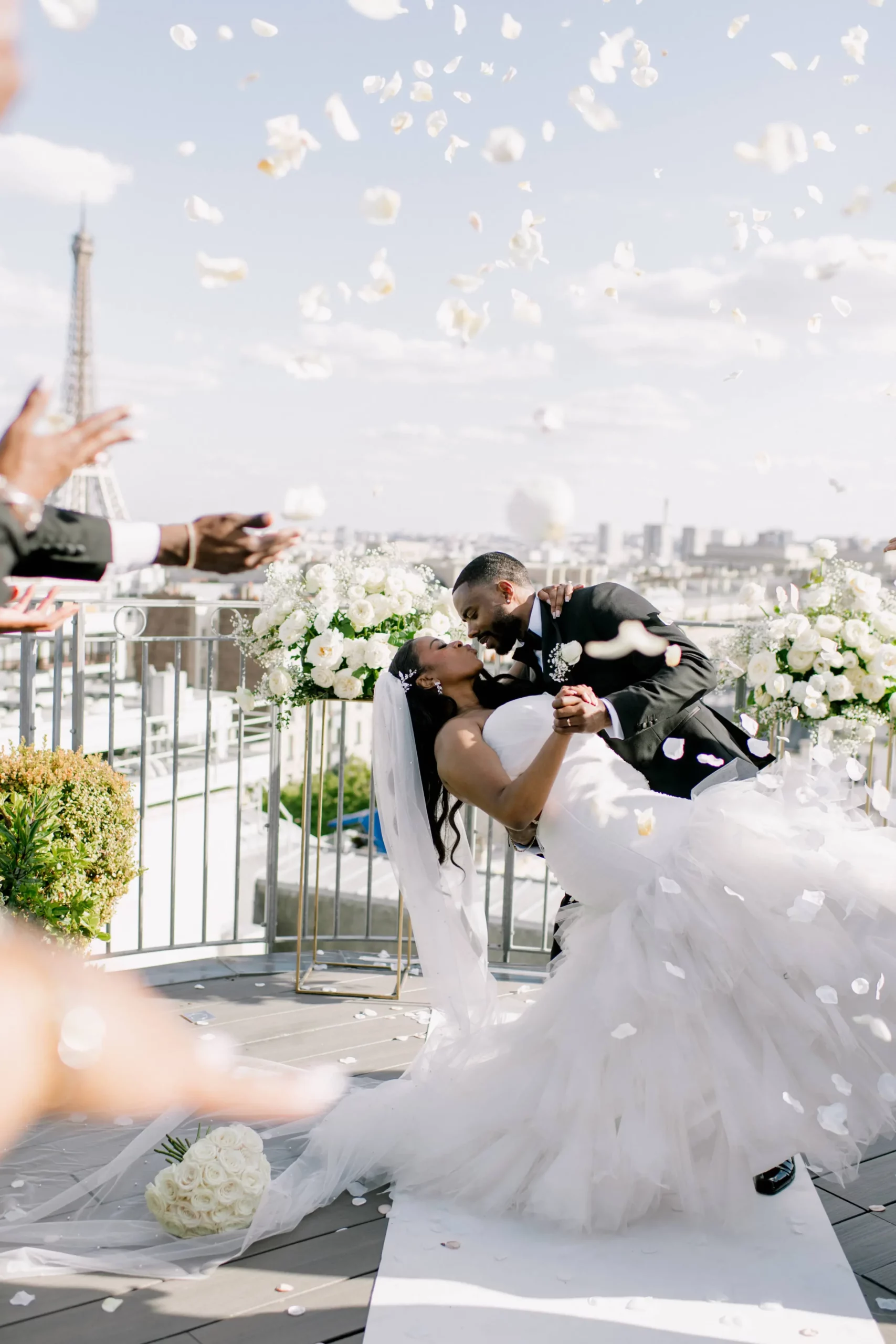
Is eloping in Paris legal for foreign couples?
Short answer: yes – but the path depends on which type of ceremony you want.
Symbolic ceremony vs. civil ceremony
A symbolic ceremony is what most foreign couples choose. It has no legal value under French law, which means no paperwork, no residency requirements, and no bureaucratic delays. You can hold it anywhere – a garden, a rooftop, a riverbank at golden hour. Your officiant leads a personalised ceremony, you exchange vows, and the moment is entirely yours. To make it legally binding, you simply marry at a registry office in your home country before or after your Paris ceremony.
A civil ceremony in France is legally recognised, but it’s genuinely complex for non-residents. At least one partner must establish residency in the French commune where the marriage takes place – typically 30 to 40 days of continuous residence – and the process includes filing a full dossier de mariage at the local mairie, publishing banns for a minimum of 10 days, and attending a pre-wedding interview. Requirements vary by mairie and by nationality, so if a French civil ceremony is important to you, verify the current rules directly with the relevant town hall and your consulate.
What documents do you need?
For a symbolic ceremony in Paris: no French documents are required. Your officiant handles the ceremony; you handle nothing administrative.
For a civil ceremony in France, the typical dossier includes:
- Valid passports for both partners
- Full birth certificates with apostille
- Certificate of no impediment (or equivalent proof of single status)
- Proof of residency in the relevant commune
- Sworn French translations of all foreign-language documents
For the most current requirements, consult the official French public service portal directly.
The process takes several months from start to finish. For most couples planning from abroad, the practical recommendation is clear: choose a symbolic ceremony in Paris, celebrate the way you want, and legalise your marriage at home. It’s simpler, faster, and gives you complete freedom over where and how you celebrate.
One of the biggest misconceptions we see is couples assuming they need to go through the full French legal marriage process in order to elope in Paris. Many become unnecessarily stressed by residency requirements, translations, and administrative paperwork before realizing that most Paris elopements are symbolic ceremonies. In reality, the vast majority of international couples legally marry in their home country and come to Paris for the experience, the emotion, and the memories.
1. Setting your budget
The first step is an honest conversation about money – not a constraint, but a compass.
Start by identifying what matters most to you. Is it a photographer whose work you’ve admired for years? A venue with an unobstructed view of the Eiffel Tower? A florist who can transform a simple arch into something breathtaking? Once you know your priorities, the budget builds itself around them.
A Paris elopement can range from around €1,500 to €15,000+, depending on the level of production. A lean, beautifully executed ceremony with a photographer and officiant sits at the lower end. Add a private venue, florist, hair and makeup, and a planner, and you’re in the €3,000–€7,000 range. A premium experience – private rooftop, vintage car, full coordination – moves into five figures.
Working with a local planner often costs less than couples expect. A professional who knows Paris vendors can negotiate preferred rates, help avoid costly mistakes, and bundle services in ways that make the budget go further than planning alone. For a full breakdown of a Paris elopement budget, including detailed estimates for each vendor category, we’ve put together a dedicated resource.
2. Choosing the ideal date and season
Paris is beautiful in every season. But each one offers a different experience – and the right choice depends on what you’re after.
Climate considerations
- Spring (March–May): Blossoming gardens, soft light, and mild temperatures. The most popular season for elopements – book vendors at least 6–9 months in advance.
- Summer (June–August): Warm, long days, and golden evenings. Crowds are at their peak, especially around major landmarks.
- Autumn (September–November): Golden leaves, cooler air, and a romantic quietness that summer never quite achieves. Fewer tourists, more intimacy.
- Winter (December–February): Fairy lights, empty streets, and a certain magic that only Paris in winter delivers. Have a covered venue as a backup.
Holidays and local events
Check your chosen date against the French public holiday calendar. July 14th (Bastille Day) brings crowds and road closures across the city. Major fashion weeks in January, March, September, and October fill hotels and push up accommodation prices. The Paris Marathon in April closes key routes. None of these are dealbreakers – but they’re worth knowing in advance.
Timing for your elopement
Morning ceremonies are almost always the right call. The light is softer, the landmarks are quieter, and the streets haven’t filled yet. Golden hour – the hour before sunset – is equally beautiful for photography, but public spots will be busier. Plan your ceremony timing around your photographer’s recommendation for the specific location you’ve chosen. And always have a backup plan: a covered courtyard, a private venue, or a flexible timeline that can shift if the weather turns.
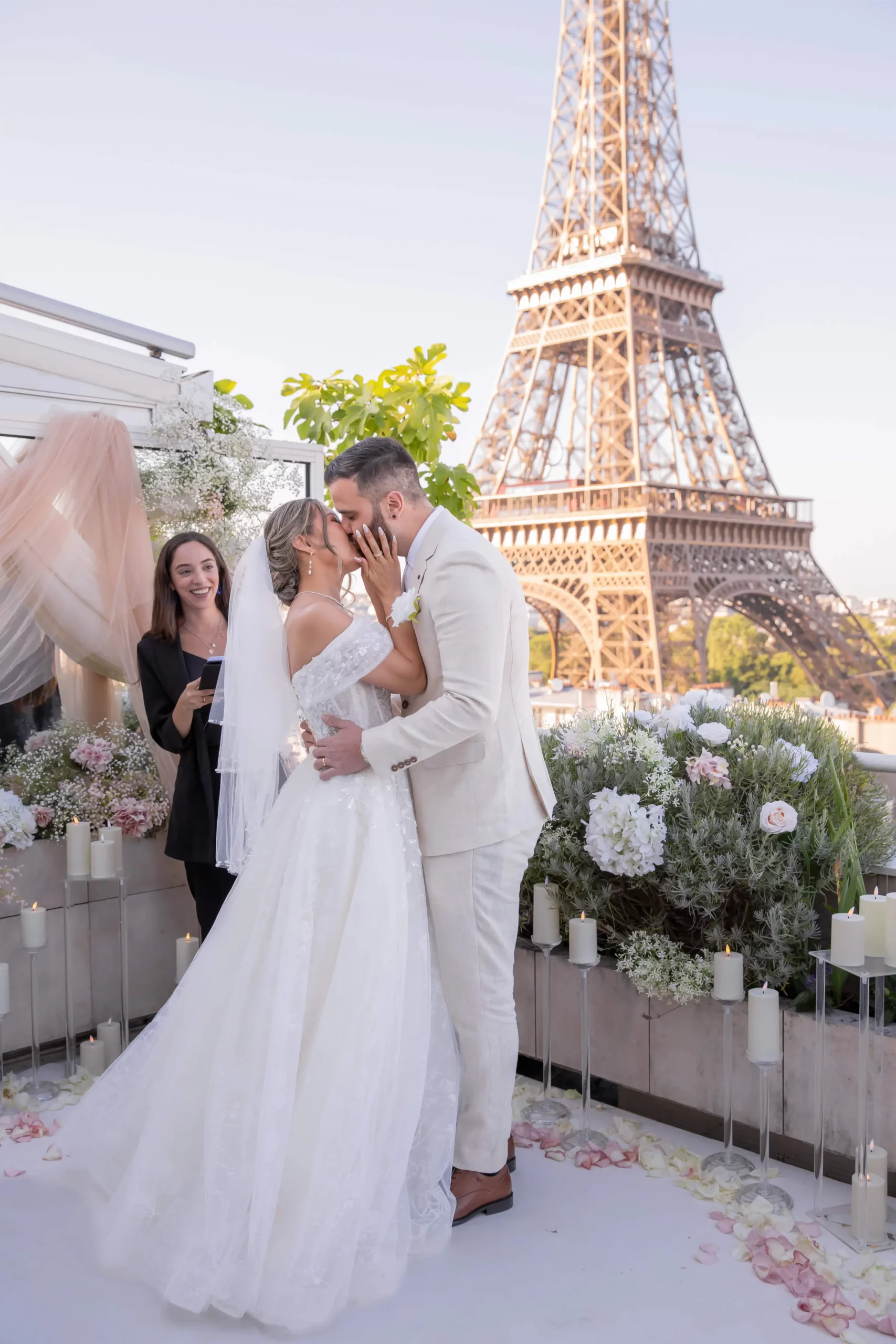
3. Selecting the ceremony location
Where you say your vows shapes everything – the mood, the photos, the memory.
Public venues
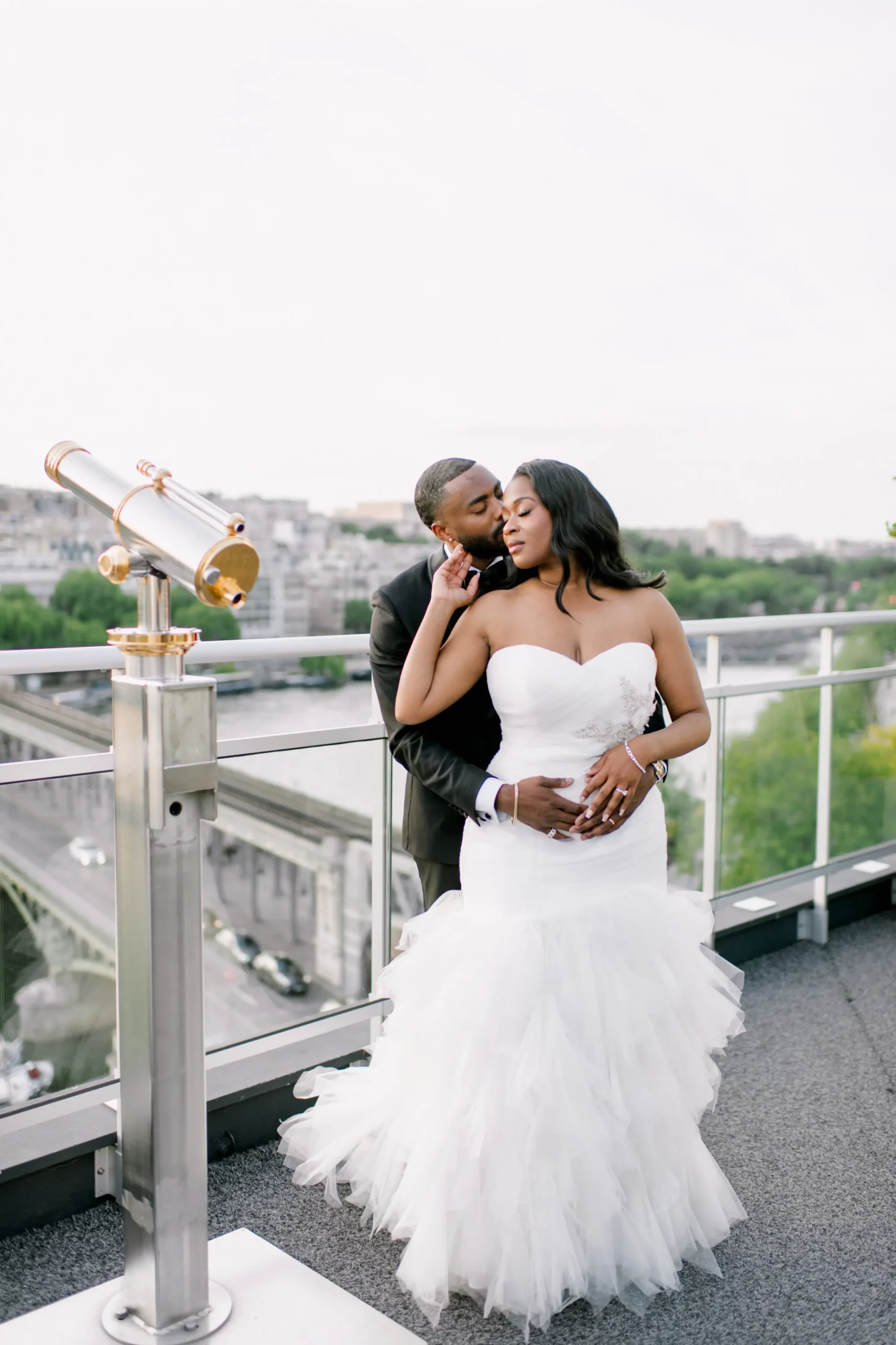
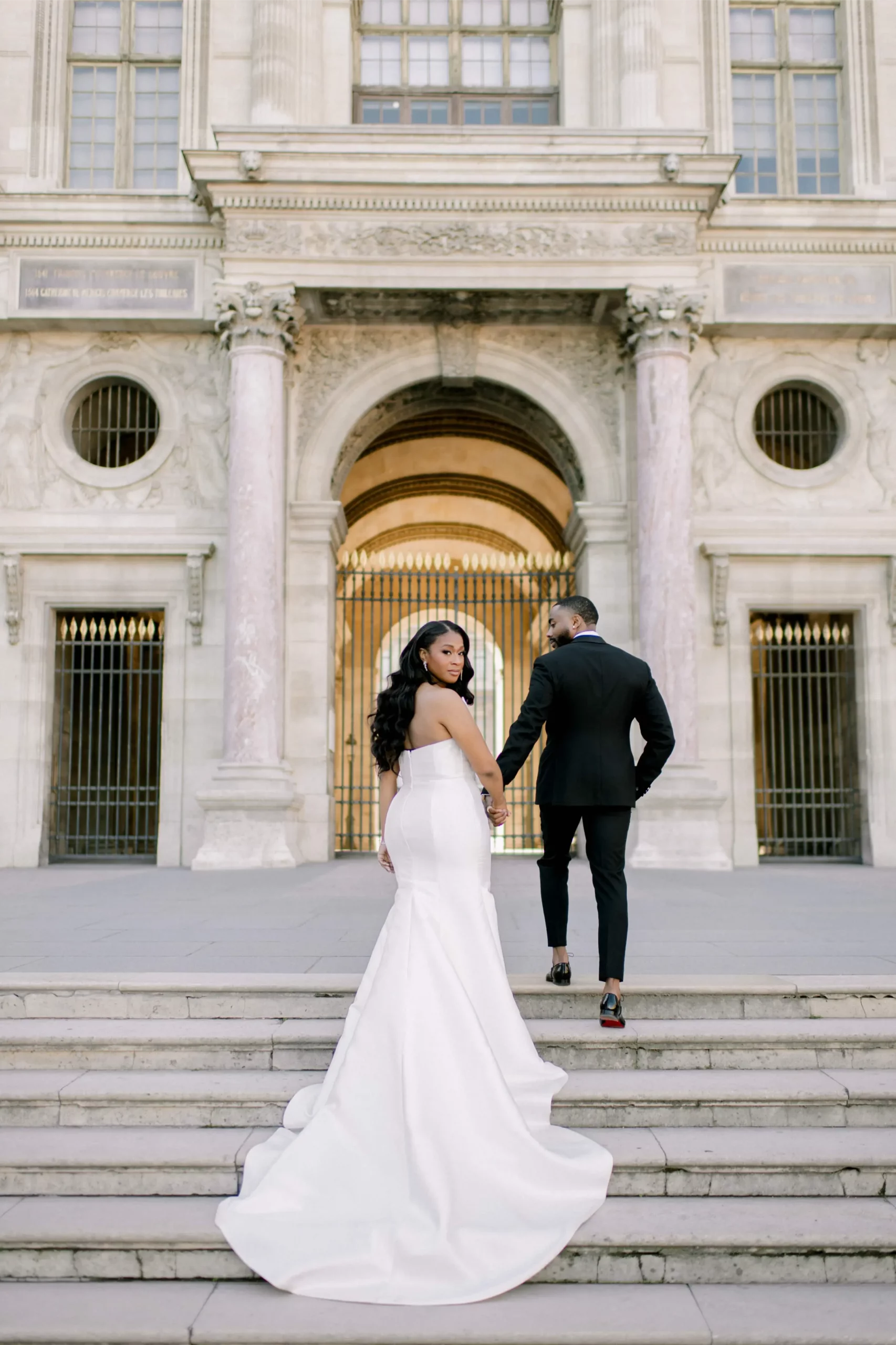
Paris is full of iconic public spaces that feel made for elopements. The Champ de Mars at dawn, the Pont de Bir-Hakeim, the gardens of the Palais Royal, the banks of the Seine. These locations are freely accessible and require no booking fee. For a small, intimate ceremony without equipment, no formal permit is generally required. Add decorative elements – an arch, chairs, lighting – and you’ll need authorisation from the City of Paris. You can find the official permit process on the City of Paris website. A planner handles this process routinely.
Explore the full list of public elopement venues in Paris to find the setting that fits your vision.
Private venues
A private venue changes the dynamic entirely. No strangers walking through your ceremony. No timing pressure. A space you can dress, light, and arrange exactly as you want.
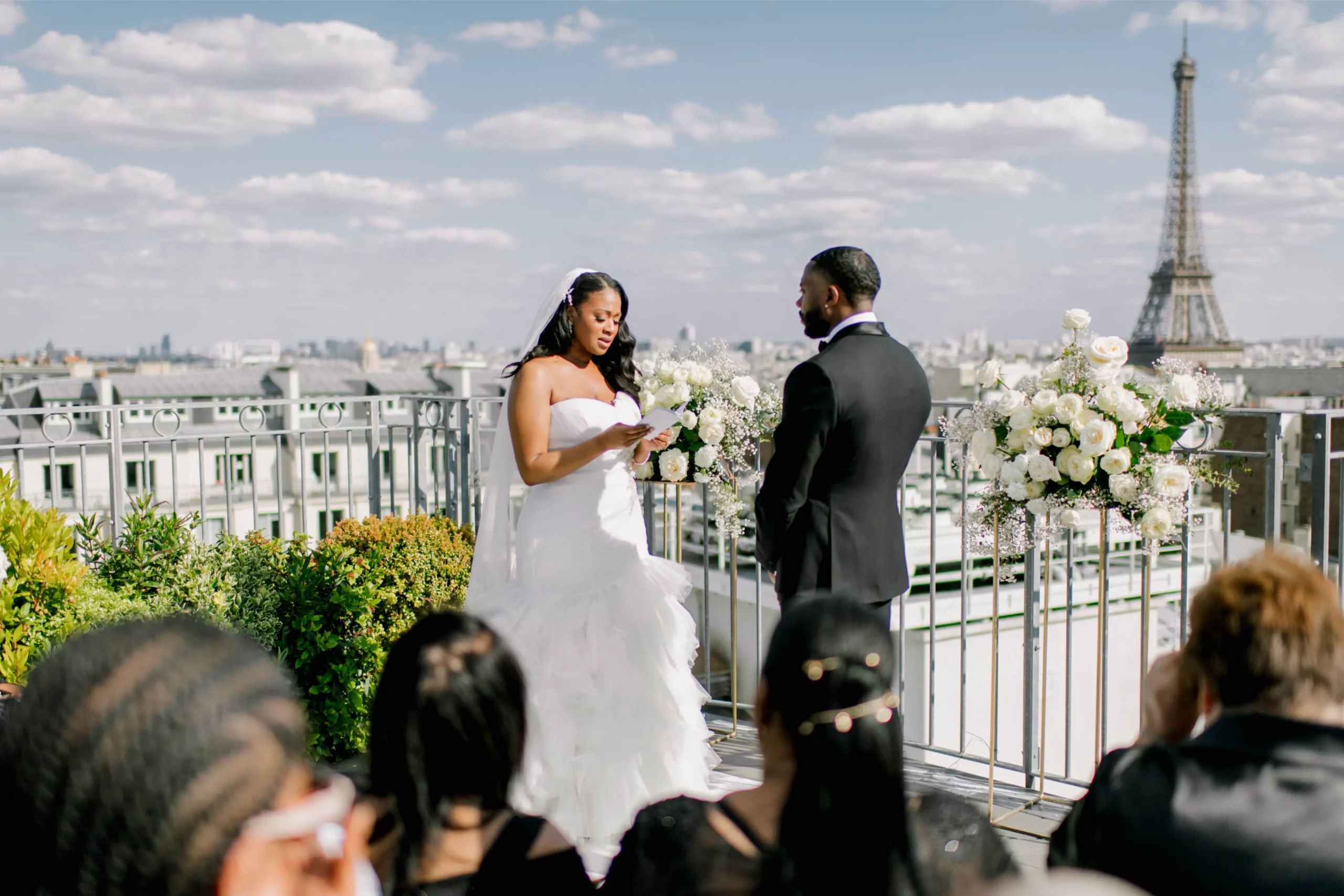
Private options in Paris range from Haussmann apartments and rooftop terraces to hidden garden courtyards and historic hôtels particuliers. They offer full flexibility – on timing, on decoration, on the pace of the day. They also tend to produce the most intimate, personal photographs.
Discover the full selection of private elopement venues in Paris to find the right setting for your ceremony.
Once you’ve chosen your venue, the next step is shaping the ceremony itself. Read our guide to elopement ceremony in Paris – structure, vows, and what to expect on the day.
4. Hiring essential vendors
The right vendors don’t just deliver a service – they make the day feel effortless.
Your core team for a Paris elopement typically includes an officiant, a photographer, a florist, a hair and makeup artist, and either a caterer or a restaurant reservation for your celebration meal. Each plays a distinct role, and the quality of each one shapes the experience.
Book early. Spring and early autumn dates fill up fast – particularly for photographers with strong reputations. Six to nine months in advance is a safe lead time for popular seasons; three to four months can work for quieter periods.
When vetting vendors, ask specifically about their elopement experience. A photographer who shoots large weddings may not have the same instinct for intimate, spontaneous moments. An officiant who has led dozens of elopements will know how to hold the emotional weight of a small ceremony in a way that a first-timer simply won’t. Experience with elopements specifically – not just weddings – is the detail worth checking.
5. Creating a personalized ceremony
A ceremony is only as meaningful as the thought you put into it.
The role of the officiant
Your officiant sets the tone for everything. A skilled one reads the couple, adjusts the pace, and creates a space where genuine emotion can surface. Choose someone whose style matches yours – warm and conversational, or more poetic and structured. Meet them before you commit. The chemistry matters.
Exchanging vows
Personal vows are the heart of an elopement. Without a hundred guests to perform for, you can be honest, specific, and genuinely vulnerable. Write to each other, not to the room. Some couples share their vows in advance; others keep them secret until the moment. Neither approach is wrong – but both require sitting down and actually writing, not improvising on the day.
Incorporating symbolic rituals
Symbolic rituals give the ceremony texture and memory. A unity candle merges two flames into one. Handfasting – binding hands with a ribbon or cord – is one of the oldest marriage traditions in the world. A ring warming passes the rings through the hands of any guests present before the exchange. Choose what resonates. Skip what doesn’t.
Decorations and details
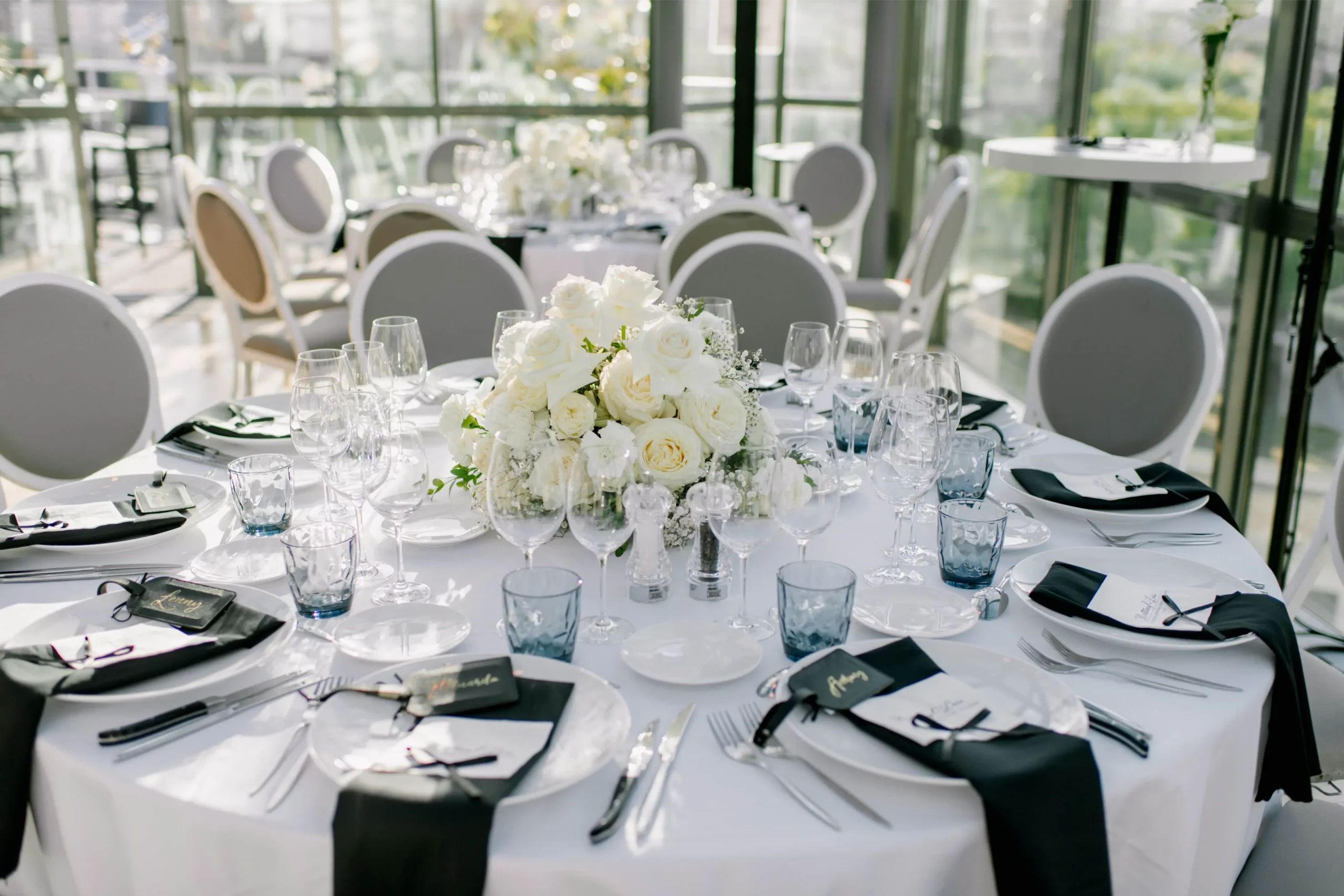
Decoration doesn’t need to be elaborate to be beautiful. Flowers, candles, a simple arch – the details that reflect your story as a couple. A florist who understands elopements will work with your venue and your aesthetic rather than defaulting to a standard wedding template. Bring personal objects if they mean something: a photograph, a piece of fabric, a small token. The ceremony is yours to design.
6. Planning the practical details
The logistics are where beautiful plans either hold together or fall apart.
Transport and logistics
Paris is a city of neighbourhoods, and a multi-location elopement – ceremony at one spot, portraits at another, dinner somewhere else – requires real coordination. A vintage car or a private driver adds atmosphere and removes stress. Book transport in advance, especially for peak season dates, and build buffer time between locations. Paris traffic is unpredictable; your timeline shouldn’t be.
Wedding attire
Think about the venue and the weather before you choose your outfit. A full ballgown on the cobblestones of Montmartre is a different experience than a silk slip dress. A linen suit in August will serve you better than a heavy wool one. Paris in spring and autumn can be cool in the morning – a light wrap or jacket is rarely a mistake. Comfort matters more than you think when you’re moving between locations all day.
Photo session and timing
Your photographs are the lasting record of the day. Plan your photo session around the light, not just the schedule. Golden hour – the 45 minutes before sunset – produces the warmest, most cinematic images. Early morning offers something quieter and more intimate. Talk to your photographer about the specific locations you’ve chosen and let them guide the timing. For detailed advice on finding the right person for this role, read our guide on how to choose a Paris elopement photographer.
Planner vs DIY – what to delegate
Some couples plan their Paris elopement entirely on their own. It’s possible – and for a very simple ceremony with a single vendor, it’s perfectly manageable. But the more moving parts you add, the more value a planner brings.
A planner handles vendor sourcing and coordination, permit applications for public locations, timeline management, and the hundred small decisions that accumulate in the weeks before the day. They also navigate the language barrier – not just linguistically, but culturally. Knowing which florist responds to emails, which venue manager prefers a phone call, which photographer is worth the premium: that knowledge takes years to build.
What couples typically manage well on their own: choosing a date, booking flights and accommodation, selecting a restaurant for the celebration dinner. What tends to go wrong without professional support: last-minute vendor cancellations, permit oversights, timing miscalculations, and the stress of coordinating everything from a different time zone.
Think of a planner not as a luxury but as a risk management decision. Browse our Paris elopement experiences to see how we approach the day – and decide what level of support makes sense for you.
FAQ
How much does it cost to elope in Paris?
A Paris elopement can be as lean or as produced as you want. At the budget tier (€1,500–€3,000), you’re typically looking at a symbolic ceremony with a photographer and officiant – simple, beautiful, and entirely focused on the two of you. The mid-range (€3,000–€7,000) adds a florist, hair and makeup, and often a private venue. A premium experience (€7,000–€15,000+) brings in a private rooftop or historic venue, a vintage car, full planning coordination, and a more produced aesthetic throughout the day.
The two biggest cost drivers are venue privacy and vendor production level. Browse our Paris elopement packages to see what’s included at each level.
Do I need a permit to elope in a public location in Paris?
For a small, intimate ceremony without any equipment, generally no. Paris’s iconic public spaces – the Champ de Mars, the banks of the Seine, the Palais Royal gardens – are accessible without formal authorisation for a couple and their photographer. The moment you add decorative elements – an arch, chairs, lighting, a sound system – a permit from the City of Paris is required. The application process is manageable, but it takes time and requires knowledge of the right channels. A planner handles this as a matter of routine.
Can non-French couples have a legal ceremony in Paris?
Yes, but it’s genuinely complex. A legal civil marriage in France requires at least one partner to establish residency in the relevant commune – typically 30 to 40 days of continuous residence – plus a full dossier de mariage filed with the local mairie, a 10-day publication of banns, and supporting documents including apostilled birth certificates and proof of single status. For most foreign couples, the practical solution is a symbolic ceremony in Paris paired with a legal marriage at home, before or after. It’s simpler, faster, and gives you complete freedom over the ceremony itself.
How far in advance should I plan a Paris elopement?
For a simple elopement – symbolic ceremony, one photographer, a public location – 3 to 6 months is a workable lead time. For a more produced experience with a private venue, a full vendor team, and a peak-season date (April–May or September–October), 6 to 12 months is more realistic. The earlier you lock in your photographer and officiant, the better: these are the vendors that book out first, and the best ones rarely have last-minute availability.
What's the best time of year to elope in Paris?
Spring (April–May) and autumn (September–October) offer the best combination of weather, light, and manageable crowds. Spring brings blossoming gardens and soft, warm light; autumn delivers golden leaves and a quieter, more intimate city. Summer is undeniably beautiful, but the crowds at major landmarks are at their peak. Winter is magical – especially around the holidays – but requires a solid backup plan for weather. Whatever season you choose, morning ceremonies consistently produce the best experience and the best photographs.
Do I need a Paris elopement planner?
Not mandatory. But for couples planning from abroad, navigating a language barrier, or building a multi-vendor day, a planner is one of the most valuable investments you can make. They handle vendor coordination, permit applications, timeline logistics, and the cultural nuances that are hard to manage from a distance. They also carry the stress so you don’t have to – which means you actually experience the day rather than managing it. See our Paris elopement experiences for a sense of what full planning support looks like in practice.
Plan your Paris elopement with us
Behind every elopement we plan is a couple who wanted something real -not a scaled-down wedding, but a day built entirely around them. We handle the logistics, the vendors, the permits, and the timing. You handle the vows.
Read Michelle & Harris’ Paris story – an Australian couple who brought their 12-year love story to the streets of Paris.
Final thoughts
Paris has a way of making the intimate feel monumental. An elopement here isn’t a smaller version of a wedding – it’s a different thing entirely. It’s a day built around presence, not performance. Around the two of you, not the expectations of everyone around you.
The city will do its part. The light on the Seine at golden hour, the quiet of a courtyard in the 6th arrondissement, the feeling of standing somewhere extraordinary and choosing each other anyway – Paris holds all of that. Your job is simply to show up, plan well, and let the day unfold.
Whatever shape your elopement takes – symbolic or legal, public or private, just the two of you or a handful of your favourite people – Paris is ready for it. And so, we’d argue, are you.
Still weighing your options? Our honest take on elopement vs wedding – written from a planner’s perspective – might help you decide.
And if you’d rather not carry the logistics alone, our elopement packages in Paris are designed to make the whole day feel effortless.
