
The real difference isn’t the guest list – it’s the intention
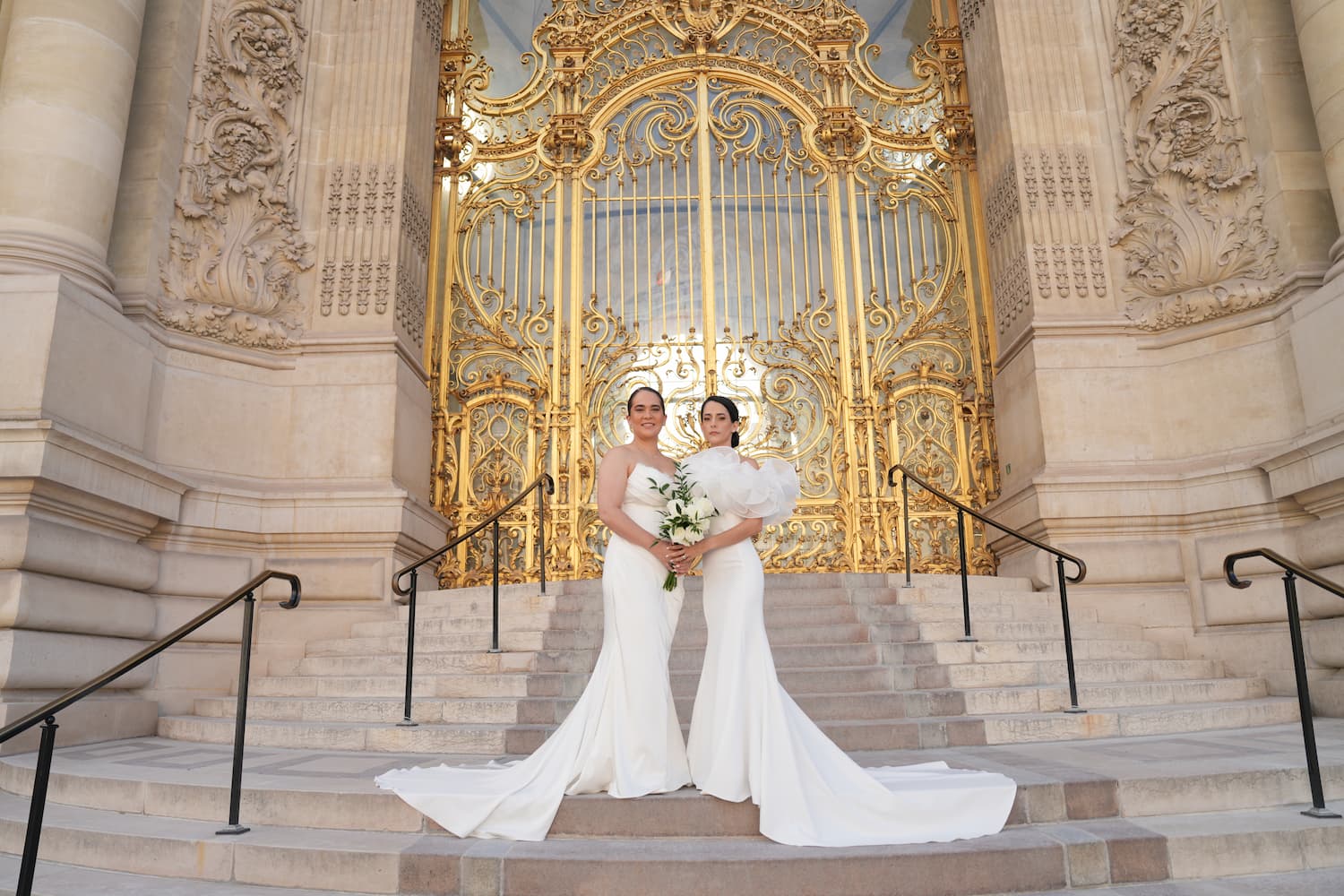
Every article you’ll find on this topic frames the elopement vs wedding debate as a numbers game: fewer than 10 guests means an elopement, more than 50 means a wedding. That framing misses the point entirely. We’ve coordinated elopement ceremonies in Paris with just two people present that felt more ceremonially rich than weddings we’ve seen with 120 guests. The format is almost irrelevant. The intention is everything.
An elopement, at its core, is an intentional act. The couple chooses to place themselves – their vows, their emotions, their experience of the day – at the centre. Nothing is performed for an audience. There’s no table seating to agonise over, no uncle who needs to be seated away from the ex-wife, no speech that runs 20 minutes too long. The day belongs entirely to the two people getting married. That’s not a compromise. For many couples, it’s the whole point.
A traditional wedding, by contrast, is inherently relational. It’s a celebration shared with the people who matter most to you, and there’s genuine beauty in that. But it’s also, structurally, a performance. You are the hosts. You are responsible for the experience of every person in that room. That’s a meaningful distinction – and one that shapes every decision from venue to timeline to what you actually remember at the end of the day.
Example 1: From a private elopement to an intimate family celebration
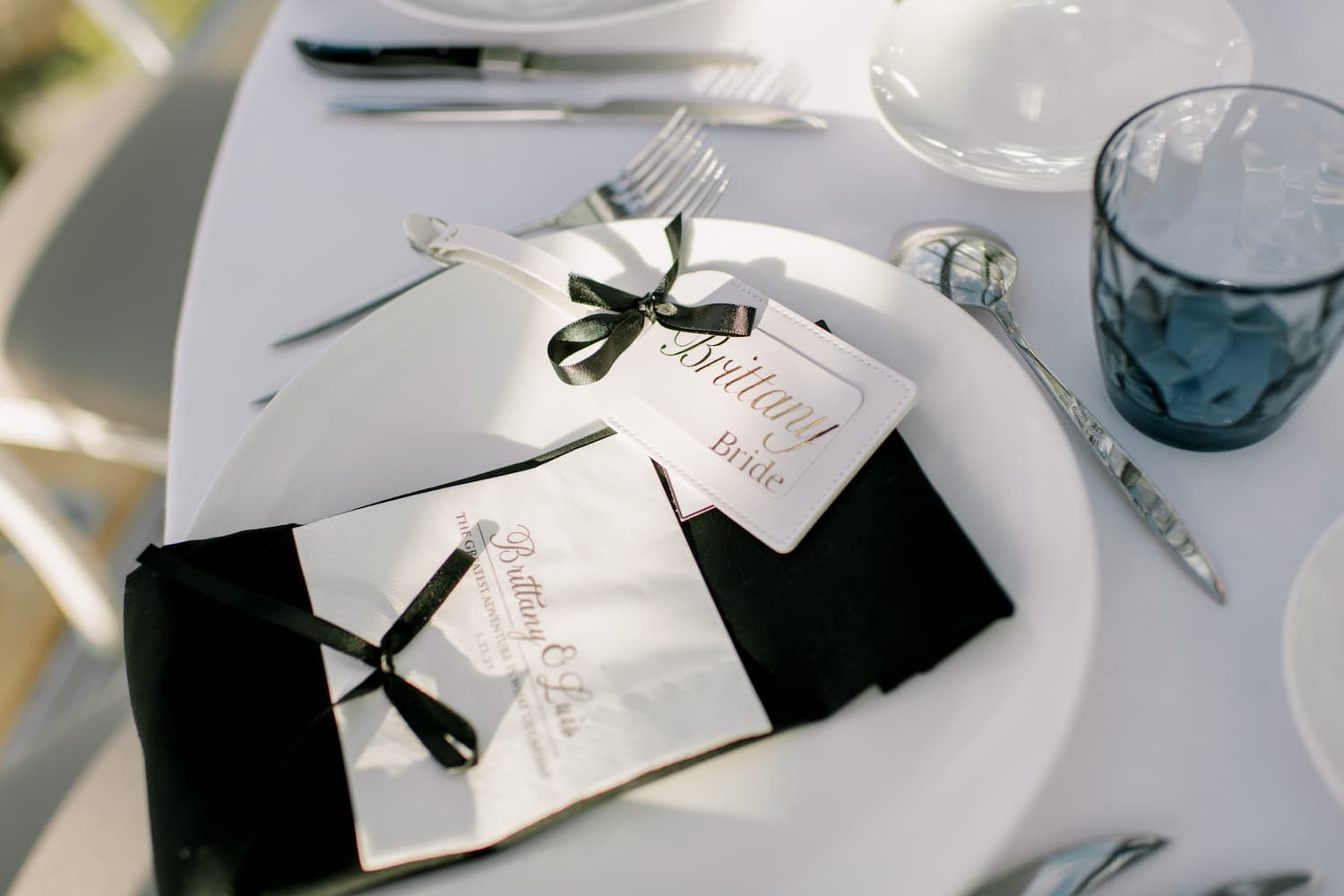
When this couple first contacted us, their vision was very clear: they wanted a private elopement experience with just the two of them. Their priority was to focus entirely on their connection, without the pressure of organizing a traditional wedding day. They imagined exchanging vows in a beautiful Parisian location, taking the time to enjoy every moment together, and creating memories that felt authentic and personal.
During our initial consultation, however, we discovered that their families were an important part of their story. They were not looking for a large celebration, but they realized they would love to share this meaningful moment with their closest loved ones.
Together, we found a balance that respected the original spirit of their elopement. They decided to invite only eight close family members, while keeping the experience simple, intimate, and centered around the couple.
They kept their ceremony in a public Paris location, allowing their family to be present for the vows and witness this special moment. Afterward, instead of turning the day into a traditional wedding schedule, the couple continued their elopement experience with a private photo session in two additional locations — just the two of them, allowing them to reconnect and enjoy the intimacy they initially dreamed of.
Later in the day, they reunited with their family for a relaxed late lunch at a beautiful local restaurant, creating a meaningful ending to the celebration without losing the essence of their original vision.
This couple discovered that an elopement does not necessarily mean being completely alone — it means creating a day that reflects what truly matters to them.
Example 2: From a traditional wedding idea to a meaningful elopement
Another couple came to us initially thinking they wanted a classic wedding celebration. They had started imagining a larger event with a venue, a full guest list, and all the traditional elements that usually come with a wedding day.
During our consultation, we took the time to understand what they truly wanted from this milestone. They realized that what they were most excited about was not the logistics of hosting a big celebration, but the experience of being together and creating unforgettable memories in a place that felt special.
The more they discussed their priorities, the more they felt that a traditional wedding format did not reflect their personalities. They were looking for something more spontaneous, emotional, and focused on their relationship rather than the expectations surrounding a large event.
They decided to transform their initial idea into an intimate Paris elopement. Instead of spending months managing guest lists, seating plans, and a large reception, they invested their time and budget into creating a meaningful experience: a beautiful ceremony, a carefully designed atmosphere, and a personalized photo journey through some of Paris’ most iconic locations.
The result was a day that felt completely authentic to them — elegant, romantic, and full of moments they could truly experience together.
Their consultation helped them realize that the perfect wedding is not necessarily the biggest one, but the one that reflects who they are as a couple.
What an elopement actually costs vs a wedding in Paris
The cost difference between an elopement and a traditional wedding in Paris is structural, not incidental. An elopement concentrates your budget on a small number of high-impact elements – ceremony, photography, flowers, attire – with no per-head catering costs, no venue hire for 80 people, and no coordination fees that scale with guest count. A traditional wedding in Paris multiplies every line item: the venue, the catering, the florals, the staffing, the entertainment. The gap between the two formats widens significantly as guest count rises.
What we consistently see in consultations is that couples underestimate how quickly a traditional wedding budget compounds. Each additional guest doesn’t just add a plate at dinner – it adds a chair, a place setting, a portion of the floral centrepiece, a slice of the entertainment budget, and a fraction of the planner’s coordination time. An elopement removes that multiplication entirely. The result is a day that can be genuinely luxurious – private venue, exceptional photography, bespoke florals – at a fraction of the total outlay of a traditional wedding.
For a detailed breakdown by vendor category, see our Paris elopement budget guide.
Who should elope – and who shouldn’t (our honest take)
This is the question couples actually want answered when they search “should I elope or have a wedding” or “should I have a wedding or elope.” Here’s our direct take, based on the couples we meet in consultation.
- Profile 1: Couple with large family expectations. Our recommendation: consider a wedding, or a micro-wedding with a clear boundary. If your families have been anticipating your wedding for years and their presence genuinely matters to you – not out of obligation, but because you want them there – then an elopement may leave you with a complicated aftermath. The day itself will be beautiful. But the relationship management that follows an elopement when families are expected to be included can be significant. If you’re eloping to escape family pressure rather than to embrace intimacy, that’s worth examining before you book.
- Profile 2: Couple on a tight budget. Our recommendation: elope. This is the clearest case. An elopement in Paris lets you invest in quality where it matters – a stunning ceremony location, a skilled photographer, exceptional attire – without the per-head costs that make a traditional wedding financially exhausting. You don’t sacrifice the experience. You concentrate on it.
- Profile 3: Couple who hates being the centre of attention. Our recommendation: elope, without hesitation. We meet this couple regularly. They love each other deeply, they want to get married in Paris, and the idea of 80 people watching them exchange vows makes them genuinely anxious. An elopement isn’t a consolation prize for people who can’t face a crowd – it’s the right format for people whose most authentic emotional expression happens in private. The vows are more honest. The tears are real. The day is theirs.
- Profile 4: Couple who wants to share the day with close friends. Our recommendation: micro-wedding, not a full wedding. If you have eight people you genuinely cannot imagine getting married without, you don’t need a traditional wedding – you need a well-planned micro-wedding. The intimacy is preserved, the logistics remain manageable, and the day still belongs to you rather than to the event. We cover this format in detail in the next section.
The 3 things couples always underestimate when choosing a wedding over an elopement
1. Coordination complexity with 80+ guests. A wedding with 80 guests isn’t eight times more complex than a wedding with 10 – it’s exponentially more complex. Every additional guest introduces a variable: dietary requirements, travel logistics, seating conflicts, late arrivals, speeches that run over. From a planner’s operational perspective, the coordination load between a 20-person micro-wedding and an 80-person wedding is not linear. Couples who’ve never planned an event at that scale routinely underestimate how much of their mental bandwidth the logistics consume – including on the day itself.
2. The emotional pressure of performing in front of an audience. Standing at the altar in front of 80 people who love you is genuinely moving. It’s also genuinely pressurising. Many couples describe their wedding ceremony as something they experienced from a slight remove – aware of being watched, conscious of their posture, managing their expression. In an elopement, there’s no audience to perform for. Couples cry when they need to cry. They laugh when something goes wrong. The emotional experience is unmediated in a way that a traditional ceremony, almost by definition, cannot be.
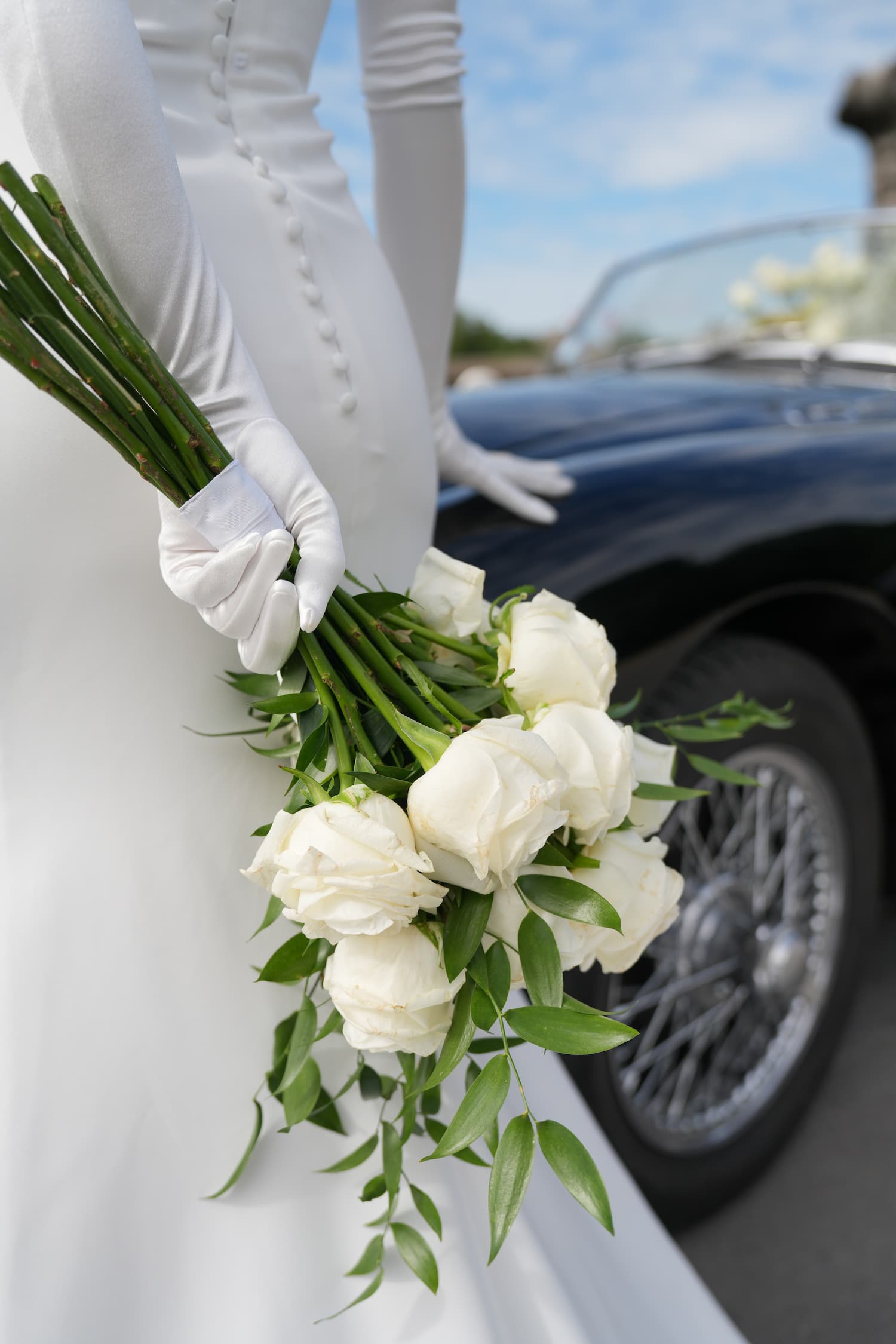
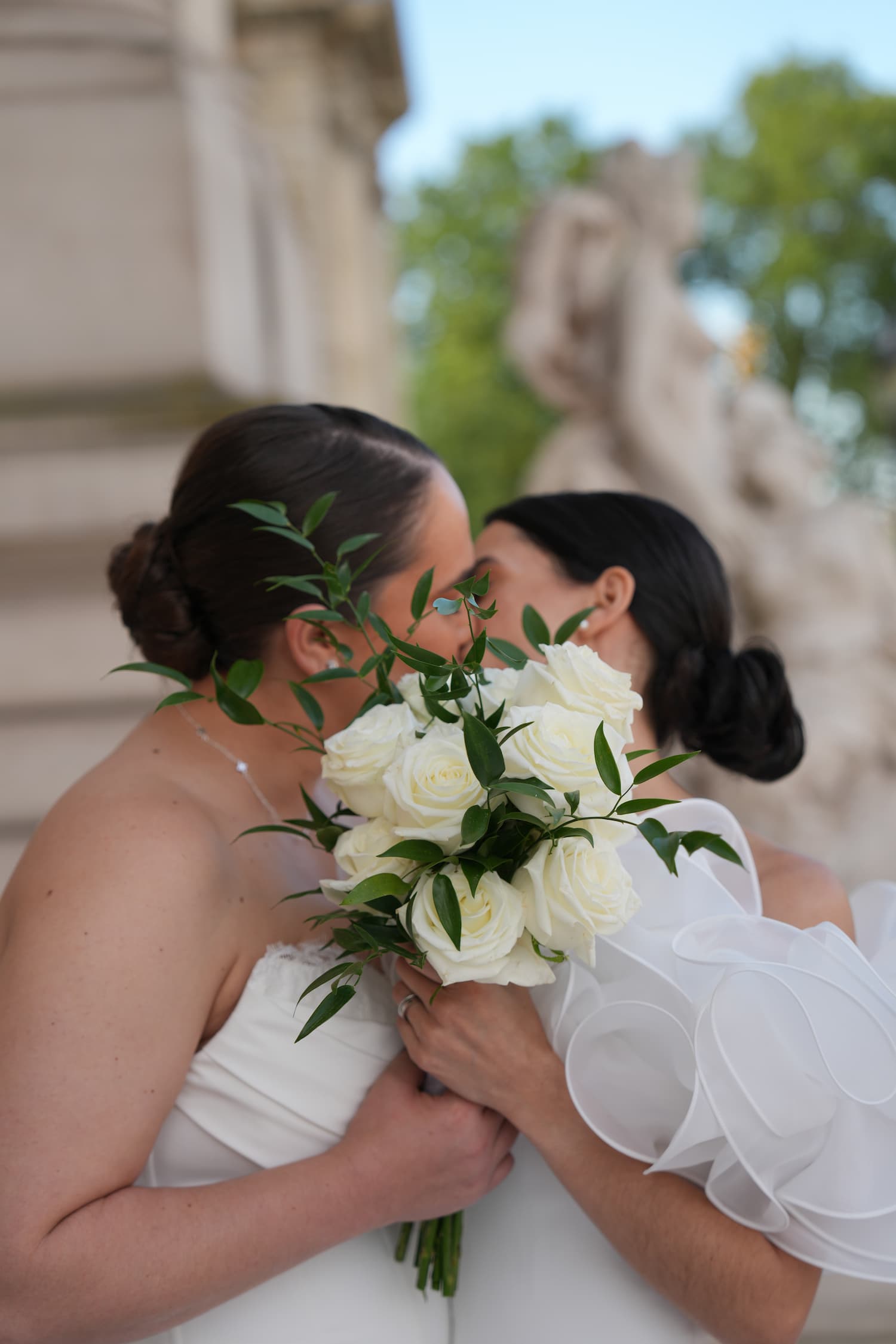
However, our experience has also shown us that intimacy is not only defined by the absence of guests, but by who is present. We have organized intimate elopement ceremonies with around 10 guests, as well as celebrations with around 30 guests, where every person present was a close family member or a meaningful friend to the couple. In these moments, the emotions were incredibly powerful — seeing tears in everyone’s eyes and feeling the genuine connection between the couple and their loved ones created a deeply moving atmosphere.
The difference is often not between having guests or not having guests, but between sharing the moment with a carefully chosen circle of people and feeling the pressure that can come with a larger-scale celebration.
3. Post-ceremony fatigue vs. the pure emotion of an elopement. After a traditional wedding ceremony, the couple typically moves immediately into host mode: greeting guests, posing for group photographs, managing the flow of the reception. The emotional peak of the ceremony is often followed by four to six hours of social obligation. After an elopement, the couple walks away together – into Paris, into a private dinner, into whatever they want. That transition from ceremony to freedom is something couples who’ve eloped describe consistently as one of the most unexpectedly powerful parts of the day.
Can you have both? The Paris micro-wedding middle ground
The binary of elopement vs wedding obscures a third option that we plan regularly and that suits a significant portion of the couples we work with: the micro-wedding. Typically 10 to 20 guests, a micro-wedding preserves the intimacy and emotional focus of an elopement while including the people who genuinely matter. It’s not a small wedding in the sense of a scaled-down traditional event – it’s a fundamentally different format, designed around presence rather than performance.
Eloping and getting married in front of a small circle of close friends are not mutually exclusive ideas. A micro-wedding in Paris can include a private ceremony at a rooftop venue with Eiffel Tower views, a seated dinner for 15, and a photographer who has the access and the time to document the whole day properly – because there are 15 people, not 80. The logistics are manageable. The budget is controlled. And the day retains the quality of attention that makes an elopement feel so different from a traditional wedding.
This is a format we regularly see couples choose when they want the intimacy of an elopement while still sharing the moment with their closest loved ones. For example, we have organized intimate Paris ceremonies with a small group of guests, including a rooftop ceremony in the 16th arrondissement with 10 guests, followed by a private dinner at the same location indoors, where the couple could continue celebrating with their loved ones in a relaxed atmosphere with a cake cutting and champagne tower for nice photos to a delicious catered private dinner.
We have also created elopement-style experiences for couples with around 10 guests, where the ceremony remained the emotional focus of the day, followed by a personalized photo session across different Paris locations. By keeping the guest list intentionally small, the couple was able to share their vows with their closest circle while still preserving the freedom and intimacy usually associated with an elopement.
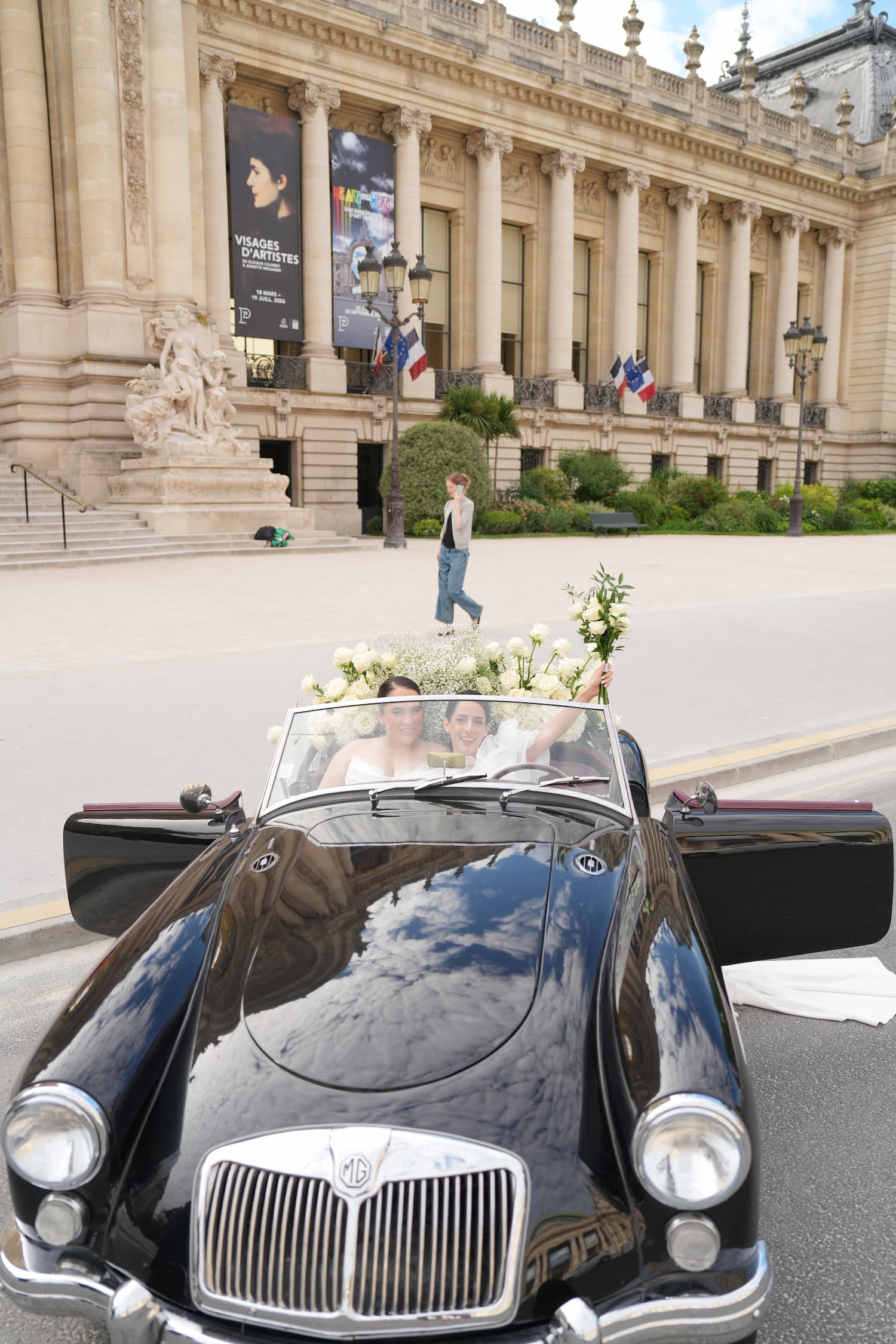
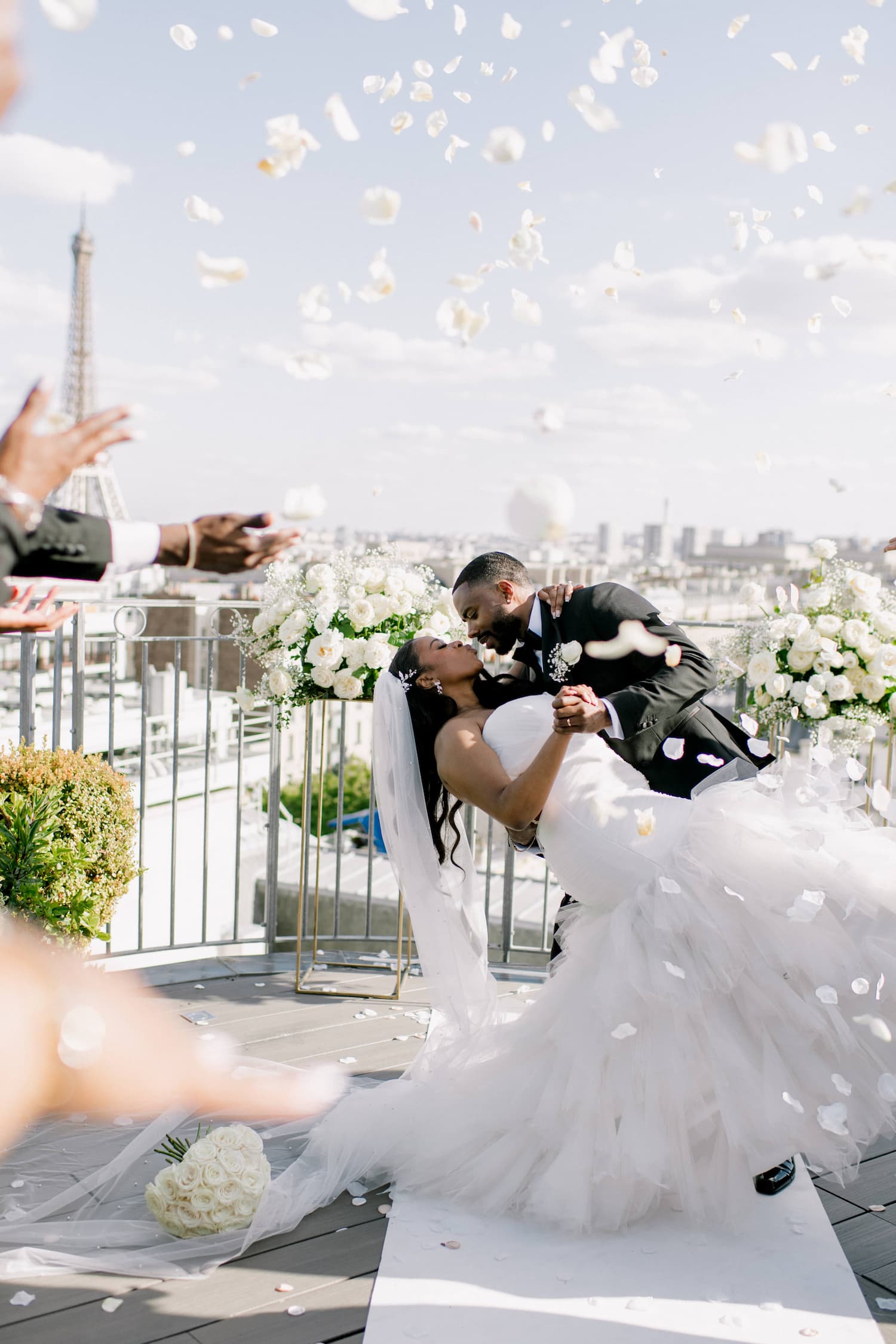
For couples considering this format, the key question to ask is: if we reduced our guest list to the 12 people we’d call first with good news, would we feel at peace with that? If the answer is yes, a micro-wedding is almost certainly the right choice. If the answer reveals that the list expands to 40 the moment you start thinking about it, a traditional wedding may be more honest to your actual situation. To start thinking through the practicalities, our guide on how to elope in Paris covers the logistical foundations that apply to both elopements and micro-weddings in the city.
Our verdict – and how to decide in 5 minutes
After planning both formats extensively in Paris, our honest position is this: most couples who come to us uncertain between an elopement and a wedding already know the answer. They’re just looking for permission to choose it. If the idea of an elopement feels like relief rather than loss, that’s your answer. If it feels like something you’d have to explain and justify to everyone you know, a micro-wedding or traditional wedding is probably the more honest path.
Use the decision tree below. Three questions, two minutes, a clearer head.
Ready to plan your Paris elopement? Explore our Paris elopement packages.
Ready to Plan Your Paris Elopement?
Les Entremetteuses is a Paris-based elopement and wedding planning agency specializing in international couples. We handle everything: the venue, the photographer, the ceremony, the logistics, so you can focus entirely on each other. Every elopement we plan is completely bespoke. No templates, no generic packages. Just a day that reflects who you are as a couple.
Frequently asked questions
What is the main difference between an elopement and a wedding?
Is eloping in Paris legal?
A symbolic elopement ceremony in Paris – which is what most international couples choose – is not a civil legal marriage under French law. It’s a meaningful, personalised ceremony conducted by an officiant, with a commemorative certificate. If you need legal recognition, you would need to marry civilly in your home country either before or after the Paris ceremony. Many couples do exactly this.
Is a Paris elopement cheaper than a traditional wedding?
Structurally, yes – significantly so. An elopement eliminates the per-head costs that compound with guest count: catering, venue capacity, entertainment, staffing. The budget is concentrated on a small number of high-impact elements, which often means a more luxurious experience at a lower total cost.
Can we invite a few guests to our Paris elopement?
Absolutely. The moment you include guests, you’re moving toward a micro-wedding format – typically 10 to 20 people. This is a distinct and excellent option that preserves much of the intimacy of an elopement while including the people who matter most. We plan micro-weddings in Paris regularly.
How far in advance should we plan a Paris elopement?
For a well-coordinated elopement with a private venue, photographer, officiant, florals, and hair and makeup, we recommend planning at least 4 to 6 months in advance. Peak season (May through September) books faster. Some couples plan in as little as 6 to 8 weeks for a simpler format, but earlier is always better for location and vendor availability.
